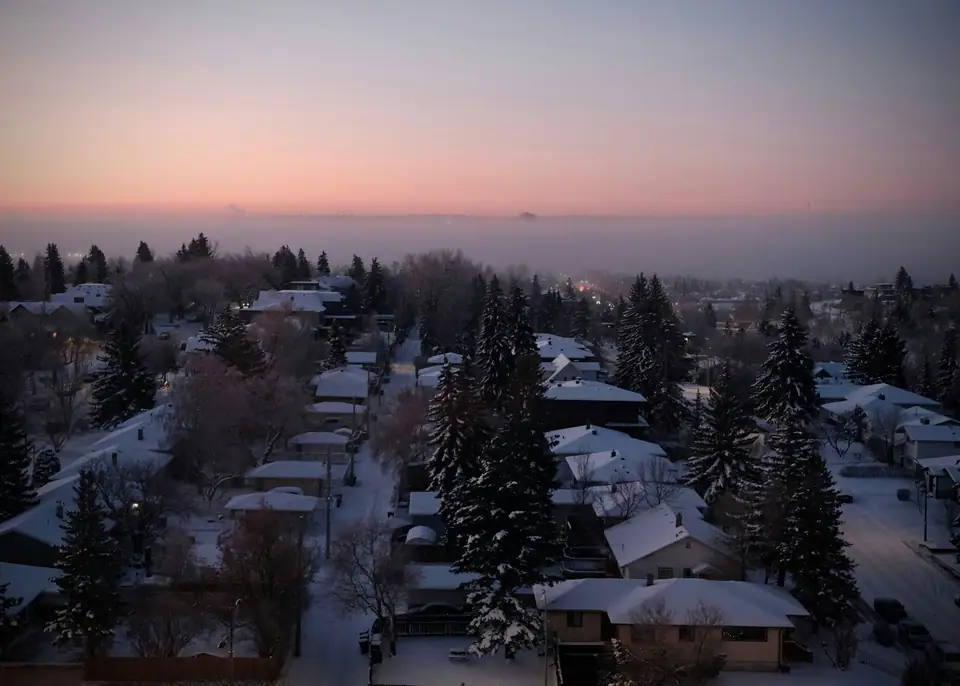
Horace lies south of Fargo and West Fargo along the Sheyenne River. Once a small farm town, it has grown into a suburb with new subdivisions on what used to be fields, close to the metro's flood diversion project. If you're building or have just built in Horace, you have an advantage: radon features are far cheaper to include during construction than to add later.
Ask your builder these questions
- Will there be a gas-permeable layer under the slab? Usually 4 inches of clean gravel, or a soil-gas mat, so suction can spread later.
- Will a vapor barrier go over it? Heavy polyethylene sheeting, lapped and sealed, helps keep soil gas out and moisture down.
- Will the slab and penetrations be sealed? Including the sump basin with an airtight lid.
- Will there be a vent pipe? A 3- or 4-inch PVC pipe from below the slab, through the house, out above the roof, labeled as a radon pipe.
- Is there an electrical outlet in the attic near the pipe? So a fan can be added easily if testing shows it's needed.
These are the basic features the EPA describes for radon-resistant new construction. Whether they're required for a North Dakota home depends on the codes your jurisdiction has adopted, so ask the builder directly rather than assuming.
Test after you move in
Even with radon-resistant features, test. A Minnesota Department of Health study of new homes with passive systems found that roughly one in five still tested above 4 pCi/L. Test once the house is lived in, with heat or AC running, and ideally include a winter test, when readings tend to be higher. If your result is 4 or higher, an installer can usually add a fan to the existing pipe in a few hours.
Not building, but bought new?
Look for the radon pipe in the basement mechanical room. If there isn't one, a standard sub-slab or sump-based system is the fix, and new slabs with a gravel layer are often easy to mitigate. See how systems are built for clay and cold.
Rural homes outside town
Some Horace-area homes are on acreage with private wells. Radon can also come from well water, though soil gas is the main source in most homes. Test the air first.
Get a quote
Send your ZIP code and whether you have a passive pipe. One certified local professional who serves Horace will contact you. For prices, see the cost guide.
Common questions
Is radon-resistant construction required in Horace?
It depends on the building code your jurisdiction has adopted, which can change. Ask your builder and the local building official. Even if it is not required, the features are inexpensive during construction.
When should I test a new Horace home?
Once you are living there normally. A winter short-term test gives a conservative result, and a long-term test of 90+ days gives the best yearly average.
Can a builder add the fan for me?
Some will. In North Dakota, the DEQ recommends using a nationally certified radon professional (NRPP or NRSB) for mitigation work, so ask who will design and verify the system.