The unit: picocuries per liter
U.S. labs and monitors report radon in picocuries per liter of air (pCi/L). Some digital monitors can show becquerels per cubic meter (Bq/m³) instead; divide Bq/m³ by 37 to get pCi/L. According to the EPA, the average indoor level nationwide is about 1.3 pCi/L. In North Dakota, the DEQ reports that a majority of homes tested are above 4 pCi/L, so results above the national average are common here.
What to do at each level
| Your result | What the EPA suggests |
|---|---|
| Under 2 pCi/L | No action needed. Retest every couple of years or after big changes to the house. |
| 2 to under 4 pCi/L | Consider a fix. No level is known to be completely safe. |
| 4 pCi/L or more | Fix the home. This is the EPA action level. |
Confirming a high short-term result
A single 2- to 7-day test is a snapshot. Before spending money, the EPA suggests confirming:
- Quick route: run a second short-term test in the same spot. If the average of both is 4 or more, mitigate.
- Thorough route: run a long-term test (more than 90 days). If it's 4 or more, mitigate.
If the first reading was several times the action level, many people move straight to a second short-term test and then to quotes, rather than waiting months.
Winter vs summer readings
Because houses here stay closed and heated for much of the year, a winter test usually reads higher than one in July. That's not a flaw. A winter result is a conservative picture of the months you spend most time indoors. A long-term test that spans winter gives the most useful average.
Getting a good test
- Test the lowest level you use regularly, usually the basement in Fargo-area homes.
- Place the kit about 20 inches or more above the floor, away from the sump, floor drains, exterior walls, windows and heating vents.
- Keep windows and outside doors closed for 12 hours before and during a short-term test, except for normal coming and going.
- Don't run fans that blow air across the kit.
- Send the kit to the lab promptly and note the start and end times exactly.
Where to get a test
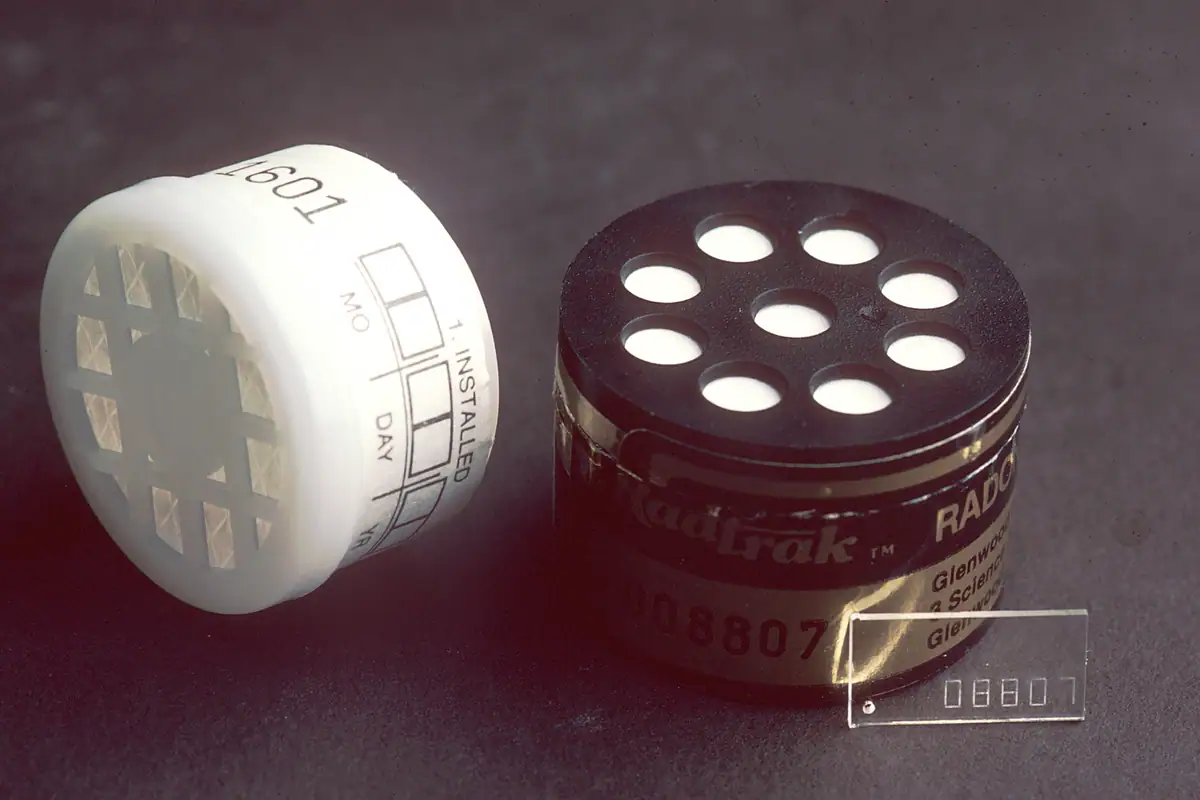
Kits are sold at hardware stores and online. The ND DEQ radon program and the Minnesota Department of Health publish information on testing, and the Fargo Public Library has lent radon test kits in recent years (check current availability). For a home sale, a certified professional with a continuous monitor is common. See our radon testing page.
After a system is installed
Test again between 24 hours and 30 days after the fan starts. Then retest every two years, and after major renovations, as the EPA recommends.
Result of 4 or more? Request a mitigation quote.
Common questions
Why did my neighbor get a different result?
Radon depends on the soil directly under each house and how each house is built and used. Neighboring homes often test very differently.
Is a digital home monitor accurate enough?
Consumer monitors are useful for watching trends, especially over weeks. For decisions like a home sale, use a lab-analyzed kit or a certified professional with a calibrated continuous monitor.
Should I test upstairs bedrooms too?
The lowest lived-in level usually reads highest, so test there first. Testing a bedroom upstairs can be reassuring but is rarely needed for the decision.