Step 1: Check the right credential for your side of the river
| Where the home is | What to ask for |
|---|---|
| Fargo, West Fargo, Horace, Casselton (North Dakota) | National certification through the National Radon Proficiency Program (NRPP) or the National Radon Safety Board (NRSB), which the ND DEQ recommends. North Dakota doesn't run its own contractor license. |
| Moorhead, Dilworth (Minnesota) | A Minnesota Department of Health (MDH) radon mitigation license. It's required by Minnesota law, and installed systems get an MDH tag. |
Many metro companies hold both. Check the credential on the certifying body's or MDH's public list rather than relying on a logo on a truck.
Step 2: Ask cold-climate questions
A system that works in Texas can fail in a Fargo January. Ask:
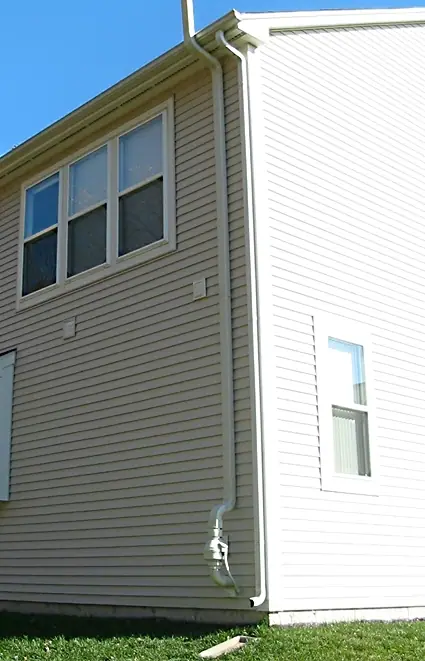
- Where will the fan go? Attic and garage-attic fans are protected from the worst weather; exterior fans need to be rated for it.
- How will you handle condensation? Pipes should slope back toward the suction point so water drains under the slab.
- What about frost at the exhaust? Ask how they prevent ice from building up and blocking the pipe or dropping off above a door.
- Is any of the pipe outside? If so, will it be insulated or sized up to reduce freezing?
Step 3: Ask about your soil and sump
Red River Valley clay can restrict airflow under a slab. Ask whether the contractor will run a diagnostic test to measure how suction spreads, and whether they'd use your sump and drain tile as the suction point. A contractor who quotes without considering either may be guessing.
Step 4: Compare written quotes line by line
- Number and location of suction points
- Fan model and location; pipe route; exhaust location above the roof
- Sealing work: sump lid, floor drains, cracks, floor-wall joint
- Pressure gauge (manometer) and system label
- Electrical work and any permit
- Post-mitigation test and what happens if the result is still 4 pCi/L or higher
- Fan and workmanship warranties
Step 5: Think about the follow-up
The EPA recommends a short-term test between 24 hours and 30 days after the system starts. Some installers include it; others suggest an independent tester, which avoids any question of the installer grading their own work. Either way, get the result in writing and keep it with the system paperwork: you'll want it if you sell. After that, check the gauge now and then and retest every two years.
Red flags
- No credential, or a North Dakota-only contractor offering to work in Minnesota without an MDH license.
- "Sealing only" offered as a complete fix. The EPA doesn't recommend sealing alone.
- Exhaust below the roofline or near windows.
- No follow-up test and no written guarantee about results.
- High-pressure tactics or same-day-only pricing.
How we pick who we refer
We pass each request to one independent professional who holds the right credential for your state, carries liability insurance, installs to the current ANSI/AARST standard for existing homes, and gives written quotes. Please still verify the credential yourself. Request a quote when you're ready.
Common questions
Does North Dakota license radon contractors?
North Dakota does not run its own radon contractor license. The ND DEQ recommends using a professional certified by NRPP or NRSB.
How do I check an MDH radon license?
The Minnesota Department of Health publishes a list of licensed radon mitigation professionals and companies. Ask for the license number and look it up.
How many quotes should I get?
Two or three is usually enough. Compare what is included, especially winter details, suction points and the follow-up test, not just the price.